Losing a tooth can feel overwhelming, especially when you’re faced with different ways to replace it. The two most popular methods are partial dentures and dental bridges. Both will restore your smile, but they’re designed, installed, and cared for very differently.
Understanding these key differences is the first step to choosing the right solution for you. Let’s explore how each option works so you can feel confident in your decision.
Partial Dentures vs. Dental Bridges: Choosing What’s Right for You in Columbia, MD
Losing a tooth can be a stressful experience, but you have excellent options for restoring your smile. The two most common solutions for replacing one or a few missing teeth are partial dentures and dental bridges. While they both solve the same basic problem, they work in very different ways. Knowing the key differences in their design, cost, and how they affect your daily life will help you make the right choice for your health.
What Are Partial Dentures?
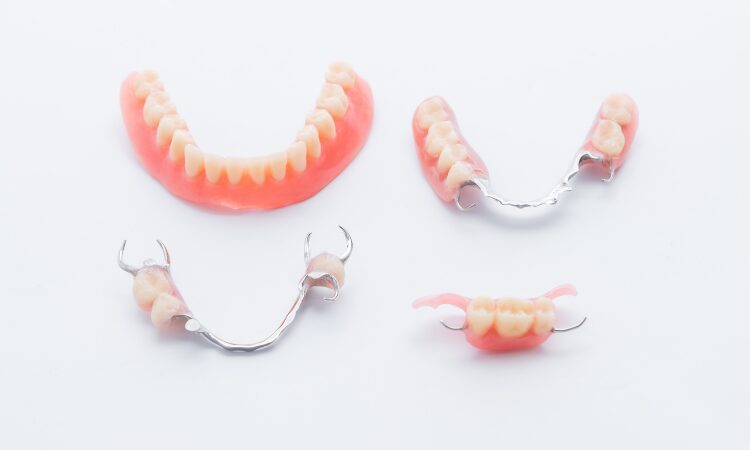
A partial denture is a removable dental appliance that replaces missing teeth. Think of it as a retainer with prosthetic teeth attached. It’s typically made from a combination of a metal framework for strength and pink acrylic that blends in with your gums. The partial fits over your gums and uses small metal or tooth-colored clasps to hook onto your remaining natural teeth.
The biggest advantage of a partial is that you can take it out. This makes it easy to clean both the denture itself and your natural teeth, which is great for keeping your teeth healthy. Partials are also generally the more affordable option upfront. They can be a good solution if you think your dental situation might change in the future. They’re relatively easy to adjust.
What Are Dental Bridges?
A dental bridge, as the name implies, will “bridge” the gap left by missing teeth. Unlike a partial, a bridge is a permanent fixture. It consists of artificial teeth that are anchored firmly in place by dental crowns placed on the healthy teeth on either side of the gap. These supporting teeth are called abutments.
Because it’s cemented in, a bridge feels much more stable and permanent than a partial denture. It doesn’t move or shift when you talk or eat, and it closely mimics the look and function of real teeth. A major benefit of a bridge is that it helps preserve the jawbone beneath the missing tooth. It also prevents your other teeth from shifting out of place.
Weighing the Pros and Cons
To make a smart decision, you need to look at the trade-offs of each option.
The Case for Partial Dentures:
- Pros: They’re less expensive initially and are non-invasive. Your natural teeth don’t need to be heavily altered for them to fit. The removability makes for easy cleaning.
- Cons: They can feel less stable and may take some time to get used to. Some people find that they can slightly affect speech or feel a bit bulky. The clasps that hold them in place might also be visible when you smile.
The Case for Dental Bridges:
- Pros: They provide superior stability and comfort because they’re fixed in place. They offer a very natural look and feel, and they’re excellent for holding the structure of your jaw and bite.
- Cons: The process is more involved and irreversible. The healthy teeth on either side of the gap must be filed down to accommodate the supporting crowns. This means removing some of their natural enamel. Bridges also typically have a higher upfront cost than partials.
What Should Guide Your Decision?
Your choice will ultimately depend on your personal circumstances. Here are the factors you should discuss with your dentist:
- Your Budget: Partials are often the more budget-friendly choice initially.
- Your Long-Term Goals: Do you want a permanent solution or something that can be adapted over time? A bridge is a long-term commitment, while a partial offers more flexibility.
- The Health of Your Adjacent Teeth: If the teeth next to the gap have large fillings or are weak, crowning them for a bridge might actually be a beneficial way to protect them. If they’re perfectly healthy, you might be hesitant to have them filed down.
- Your Lifestyle and Comfort: Consider what you value most. If you prioritize a rock-solid, natural feel and don’t mind a more complex procedure, a bridge might be better. If you prefer a reversible option and are comfortable with a removable appliance, a partial could be the right fit.
The Most Important Step: Talk to Your Dentist
This isn’t a decision you should make alone. Your dentist in Columbia, MD, is your best resource. Dr. Sahil Goyal will examine your mouth, the health of your gums and remaining teeth, and take X-rays to check your bone density. He can then provide a professional recommendation based on your unique anatomy and needs.
At Veritas Dental Institute, we believe in empowering our patients with clear information. We’re here to walk you through the entire process, explaining the procedures, costs, and maintenance for both partial dentures and dental bridges.
Ready to find the best solution for your smile? Don’t guess about your oral health. Contact our Columbia office today at 410-670-8211 or schedule an appointment online for a thorough consultation. Let’s work together to restore your smile with the option that’s truly right for you.