
Dental implants have become a popular and effective solution for replacing missing teeth. They are designed to blend in with your natural teeth and provide a long-term option for restoring function and aesthetics. Understanding the dental implant process in Columbia can help alleviate any anxiety you might have about the procedure.
Initial Consultation and Evaluation
The journey to getting a dental implant begins with an initial consultation. During this appointment, your dentist will conduct a thorough evaluation of your oral health. This evaluation includes a detailed examination of your gums, teeth, and jawbone. Your dentist will assess your jawbone density and overall oral health to determine if you are a suitable candidate for a dental implant. They will also review your medical history to identify any conditions that might affect the procedure.
Advanced imaging techniques, such as X-rays and 3D scans, play a critical role in the evaluation process. These images provide your dentist with a comprehensive view of your oral structures, allowing them to plan the implant procedure with precision. If your jawbone lacks the necessary density to support an implant, your dentist may recommend a bone graft. This procedure enhances bone volume, ensuring the implant has a stable foundation.
Treatment Planning
After the evaluation, your dentist will develop a personalized treatment plan. This plan is tailored to meet your specific needs and goals. It considers the number of teeth you need replaced, the condition of your jawbone, and your overall oral health. The treatment plan also outlines the implant type and surgical approach.
Your dentist will explain the steps involved and discuss anesthesia options to keep you comfortable during surgery. Understanding the treatment plan helps you know what to expect at each stage. This transparency can ease any concerns you may have and help you feel more confident about proceeding with dental implants.
Surgical Procedure
The dental implant surgery involves several key steps. On the day of the surgery, your dentist will administer local anesthesia to numb the area where the implant will be placed. This keeps you comfortable throughout the procedure. Once the anesthesia takes effect, your dentist will make an incision in the gum tissue to expose the underlying jawbone.
Next, your dentist will carefully drill a hole into the jawbone. This hole serves as the site for the titanium implant post, which acts as the root of the new tooth. The implant post is strategically positioned to ensure optimal stability and support. After placing the implant, your dentist will close the gum tissue over it to protect the area as it heals.
Healing and Osseointegration
The healing phase is a crucial component of the dental implant process. During this period, a process known as osseointegration occurs. Osseointegration involves the fusion of the implant post with the surrounding jawbone. This integration is essential for the implant’s long-term stability and success. The healing phase can take several months, depending on individual factors such as bone density and overall health. Regular follow-up appointments with your dentist are important during healing. These visits allow your dentist to monitor your progress and ensure that the implant is integrating properly.
Placement of the Abutment
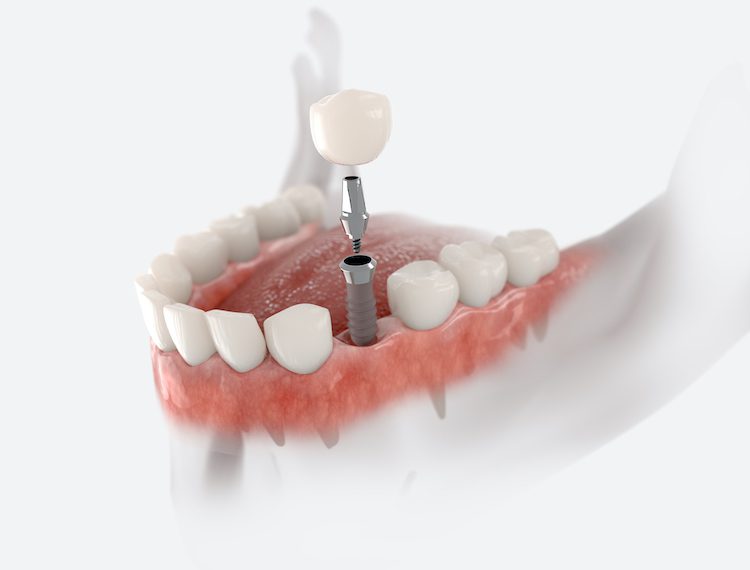
Once osseointegration is complete, the next step is placing the abutment. The abutment connects the implant post to the final crown. During this procedure, your dentist will reopen the gum tissue to access the implant. The dentist then attaches the abutment securely to the implant post.
After placing the abutment, the gum tissue will need time to heal around it. This healing process typically takes a few weeks. The abutment provides a stable base for the final crown, ensuring that it fits properly and functions effectively. Your dentist will position the abutment correctly to support the final restoration.
Final Crown Placement
The final step in the dental implant process is placing the crown. The crown is the visible part of the implant that resembles a natural tooth. To create a custom crown, your dentist will take impressions of your teeth. These impressions guide the creation of a crown that matches the color, shape, and size of your natural teeth.
Once the custom crown is ready, your dentist will attach it to the abutment. This completes the dental implant process and often results in a fully functional, aesthetically pleasing tooth. The final crown is designed to withstand the forces of chewing and speaking, providing a durable, reliable restoration.
Dental Implants in Columbia, MD
Consider visiting Veritas Dental Institute. We provide expert care and guidance for all your dental needs. If you have tooth loss or need an extraction, we are here to help restore your bite. Contact us today to schedule a consultation and learn more about implant dentistry.