You had braces in middle school or high school, and wore your retainer for a while. Then life happened: you lost or forgot your retainer, and over the years your teeth slowly drifted back.
Now you’re an adult in Columbia, MD, looking in the mirror at your smile and wondering what happened. Your front teeth overlap slightly, a small gap appears where there wasn’t one before, or one tooth has rotated just enough to show up in photos.
You don’t want braces again. You’ve heard about porcelain veneers, and you’re wondering whether they can fix the problem without another round of orthodontics. The honest answer is sometimes yes, sometimes no. The decision matters more than you’d think.
Why Teeth Move After Braces
Teeth aren’t fixed in your jaw. Ligaments hold them in place and allow small movements, and they respond to forces over time. When you had braces, the orthodontist moved your teeth into a new position, but the surrounding bone and ligaments took time to stabilize.
The retainer is what holds everything in place while that stabilization happens. If you stop wearing it too soon, or stop wearing it entirely, your teeth can drift back toward their original positions. This is called relapse, and it’s extremely common.
Age makes it worse. As you get older, your jaw keeps changing, and your teeth can shift in response to natural wear, bite forces, and changes in your gum tissue. Even patients who wore their retainers faithfully for years sometimes notice small changes in their 30s and 40s.
So you’re not imagining it. Your teeth really did move, and now you’re deciding what to do.
Can Veneers Fix Relapse?
Veneers can correct some forms of relapse, but not all. The real question is whether the issue is cosmetic or functional.
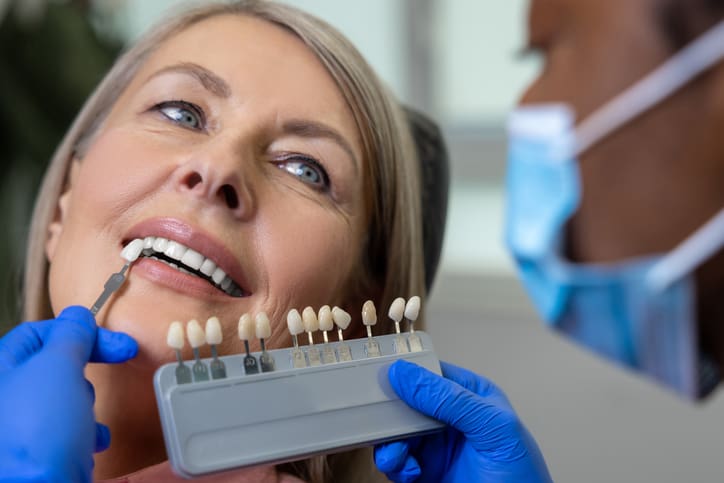
Cosmetic relapse occurs when teeth shift slightly, but the bite remains healthy. One tooth may have rotated a few degrees. A small gap may have opened, or the edges of your front teeth may look uneven. In these cases, veneers can straighten your smile by reshaping the front surfaces of your teeth.
Functional relapse happens when teeth move enough to affect your bite. If your teeth no longer meet correctly, or you notice jaw pain, headaches, or uneven wear, that’s a different situation. Veneers alone won’t fix a bite problem. In fact, placing veneers on a misaligned bite can make things worse because the new porcelain will take uneven force and may chip or fail.
This is the most important part of the conversation, and it’s why the consultation at Veritas Dental Institute starts with an evaluation.
When Aligners Come First
If your teeth have moved enough to affect your bite, or if the relapse is significant, you may need aligners first, then veneers. Or aligners alone.
At Veritas Dental Institute, we offer Invisalign and clear braces in-house, so we can evaluate both options in the same consultation. You won’t be referred to an orthodontist across town and then come back months later for veneers. Dr. Amy Barrer, our orthodontist, is a former Chief Resident of the Craniofacial Team at Children’s National Medical Center. She and our cosmetic dentists use shared digital records, so they coordinate the treatment plan from the start.
Here’s how that typically works. If aligners are the right first step, we map out the movement using digital scans, then plan the veneers to fit the newly straightened teeth. If veneers alone can achieve the result, we skip the aligners and go straight to the cosmetic plan. We base the decision on your actual bite, not on which treatment is easier to sell.
When Veneers Alone Are Enough
For many patients with mild relapse, veneers alone are a great solution. Here’s what makes someone a good candidate:
- The bite is healthy, and the teeth meet evenly
- The relapse is minor (slight rotation, small gaps, uneven edges)
- The enamel is thick enough to support veneers
- The gums are healthy
- You’re looking for a cosmetic improvement, not a functional correction
If that describes you, veneers can create a straighter, more even smile without moving your teeth. Dr. Anshu Goyal’s cosmetic focus and her five consecutive Best Dentist Awards reflect her skill at this kind of transformation. Dr. Sahil Goyal’s background in full-mouth rehabilitation means he evaluates how the new veneers will function, not just how they’ll look.
What the Consultation Looks Like
At our Columbia dental office, veneer consultations for post-orthodontic patients start with a full evaluation. We review your bite, gum health, enamel thickness, and tooth position. We take digital scans and photographs. We talk about what you want your smile to look like.
Then we give you an honest recommendation. If veneers alone will work, we’ll tell you. If aligners should come first, we’ll tell you that too. If a combination makes sense, we’ll explain the sequencing and why. You don’t have to commit to anything at the first visit. We’ll help you find out where you stand.
The Patient Who Doesn’t Want Braces Again
We hear this a lot. Adults who had braces as teenagers often resist going through orthodontics again. It feels like a step backward.
But Invisalign isn’t braces. It’s a series of clear aligners that you wear for about 20 to 22 hours a day, and most people won’t notice you’re wearing them. Treatment for mild relapse often takes six to twelve months. It’s not the same experience you had as a teenager.
If aligners would give you a better long-term result than veneers alone, it’s worth considering. Veneers placed on a misaligned bite may look good for a few years, then start to fail. Aligners first, then veneers, give you a beautiful, stable result.
Dr. Sahil Goyal trained at the Pikos Institute, Spear Education, and the MOD Institute, all of which emphasize comprehensive treatment planning. That means he’s thinking about how your smile will hold up over the next decade, not just how it looks on the day the veneers are bonded.
What to Do Next
If you had braces and your teeth have moved back, start with a consultation. Our office is at 9650 Santiago Road, Suite 104, in Columbia, MD. We serve patients from Ellicott City, Clarksville, Laurel, Fulton, and throughout Howard County.
Call our dental practice at 410-670-8211 or request an appointment online. We’ll evaluate your bite, show you digital scans, and give you a clear answer on whether veneers, aligners, or a combination is right for your smile. You don’t have to go through braces again, but you do have to know what you’re working with before you decide.