You lost a tooth. Maybe it was a sudden accident, a cavity that went too far, or a tooth that finally gave out after years of problems. The pain is gone now, and the tooth is out. It feels like the problem is over, but it’s not.
What you can’t see is a quiet, steady process that has already started beneath your gums. Your jawbone is beginning to shrink. Your remaining teeth are starting to move. And the longer you wait to replace that missing tooth, the more expensive and complicated the solution becomes.
At Veritas Dental Institute in Columbia, MD, we see this happen all the time. Patients come to us years after losing a tooth, wondering why their smile looks different or why their bite feels off. Dr. Sahil Goyal and Dr. Anshu Goyal explain what is happening and, more importantly, what we can do to fix it. But the truth is, the best time to replace a missing tooth is right after you lose it. The second best time is now.
What Happens to Your Jawbone When You Lose a Tooth
Your teeth do more than help you chew. They also keep your jawbone healthy and strong. Every time you bite or chew, the roots of your teeth send tiny signals to your body. These signals tell your body to keep the bone in that area dense and full of minerals.
When you lose a tooth, that root is gone. The jawbone in that spot no longer gets the stimulation it needs. Your body assumes the bone is no longer necessary and starts to reabsorb it. Dentists call this process bone resorption.
This doesn’t happen slowly over many years. Bone loss can begin within just a few months of losing a tooth. In the first year alone, you can lose up to 25% of the bone width in that area. The longer the tooth is missing, the more bone disappears.
Over time, bone loss changes the shape of your face. Your cheeks can look sunken in, your chin can appear more pointed, and your lips can lose support. Many people don’t realize that missing teeth can make them look older than they really are.
What Happens to Your Other Teeth
Teeth aren’t independent. They rely on each other for support and stability. When one tooth goes missing, the entire system gets thrown off balance.
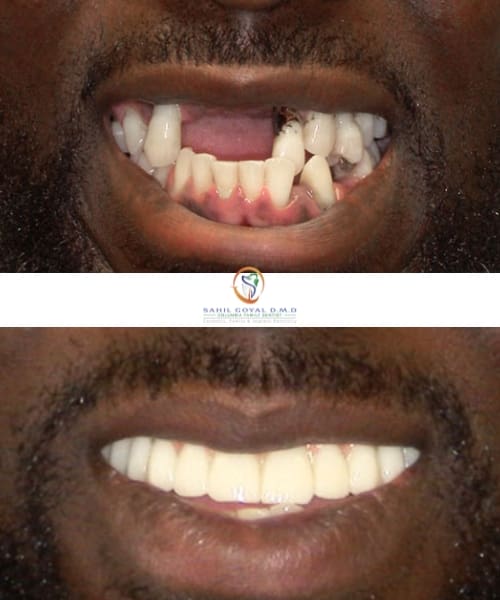
The teeth on either side of the gap will start to drift into the empty space. This happens gradually, but it’s relentless. Over a year or two, the misalignment can become quite noticeable. The tooth opposite the gap may also start to grow longer, trying to find something to bite against. This can make it loose over time.
As your teeth shift, they become harder to clean. New gaps form where food can get trapped. This increases your risk of cavities and gum disease in teeth that were once perfectly healthy. What started as a single missing tooth can end up causing problems for several other teeth.
Your bite changes too. You might start favoring one side of your mouth when you chew. This puts extra pressure on certain teeth, leading to uneven wear, cracks, or even more tooth loss later.
Why “Waiting to Save Money” Costs More
Here is where the math gets stark. A single dental implant placed promptly, before bone loss occurs, is a straightforward, predictable procedure. The cost is clear.
Wait a year or two, and you may not have enough bone for a straightforward implant. Bone grafting is required. The cost increases substantially. A bone graft adds both time and expense to the overall treatment.
Wait longer, and the neighboring teeth have drifted. If you want an implant now, you may need to orthodontically reopen the space first. That adds more cost and more time. The over-erupted opposing tooth may have become problematic and require its own treatment.
A single missing tooth, left untreated, can cascade into a treatment plan that costs two, three, or even four times what a timely implant would have cost. Putting off tooth replacement doesn’t save money. It costs more.
How Dental Implants Can Protect Your Jaw
Dental implants are the only tooth replacement option that can preserve your jawbone. An implant is a small titanium post that your dentist places directly into your jawbone. It acts just like a natural tooth root.
After the implant is placed, a process called osseointegration occurs. This means the implant fuses directly with your living jawbone, becoming a permanent part of your body.
Once healed, we attach an abutment to the implant and place a custom-made crown on top. The result looks, feels, and functions exactly like a natural tooth. And because the implant is anchored in the bone, every time you bite down, you stimulate the jaw again. This signals your body to maintain the bone in that area.
No other replacement option can do this. Dentures and bridges sit on top of the gums. They do nothing to prevent the bone underneath from slowly shrinking away.
To learn more about our dental implant services, visit:
- Dental Implants in Columbia, MD
- All-On-Four Dental Implant Concept
- Benefits of Dental Implants
- Cost of Dental Implants
- Dental Implant FAQs
- Dental Implants vs. Dentures
- Single Dental Implants
- The Dental Implant Process
What If You Have Already Lost Bone?
This is a common concern, and it’s understandable. If you have waited, you might worry that you have missed your chance for implants.
The good news is that you likely haven’t. To support an implant, you need enough healthy bone to hold it securely. Dr. Goyal can easily check this during a consultation at our Columbia office. He will use X-rays or a 3D scan to look at the shape and density of your jawbone.
If you’ve lost some bone, it doesn’t automatically mean you can’t get an implant. Many patients benefit from bone grafting. In this treatment, a special grafting material is added to the weakened area of your jaw. This material acts as a scaffold that encourages your body to grow new, strong bone around it. After several months of healing, the site is ready to support an implant successfully.
If a bone graft isn’t right for you, Dr. Goyal can discuss other excellent tooth replacement options, like bridges or dentures. The goal is to find the best way to restore your smile and your ability to chew comfortably.
The Right Time to Act
The best time to replace a missing tooth is as soon as the area has healed from the extraction, typically a few months. The bone is still present. The neighboring teeth haven’t moved. The procedure is simpler, less expensive, and produces the best long-term outcome.
The second-best time is right now. Whether you lost a tooth recently or years ago, replacing it will protect your remaining teeth, preserve your jawbone, and save you from more complex and expensive treatment in the future.
Schedule Your Consultation in Columbia, MD
If you have a missing tooth, don’t wait. The hidden costs of putting off replacement are real, and they only grow with time.
Dr. Sahil Goyal and Dr. Anshu Goyal are experienced in all aspects of restorative dentistry, including dental implants, bone grafting, and full mouth reconstruction. They will examine your smile, discuss your options, and help you find the right solution for your needs and budget.
Call Veritas Dental Institute today at 410-670-8211 or request an appointment online. We are conveniently located at 9650 Santiago Road, Suite 104, in Columbia, MD, and we proudly serve patients from Ellicott City, Clarksville, Laurel, Fulton, and all surrounding Howard County communities. Your smile and your jawbone will thank you.