
You’re missing a tooth. Maybe it’s been bothering you for a while. Maybe you’ve been hiding your smile in photos or chewing only on one side of your mouth. You’ve heard dental implants are the gold standard for replacing teeth, but the thought of surgery makes your stomach flip.
That’s totally normal. Let’s walk through exactly what happens during a dental implant procedure here in your Columbia, MD, dental practice. By the time you’re done reading, you’ll probably realize it’s not nearly as scary as you’re imagining.
You are missing a tooth. Maybe it has been bothering you for a while. Maybe you have been hiding your smile in photos or chewing only on one side of your mouth. You have heard that dental implants are the gold standard for replacing teeth, but the thought of surgery makes your stomach flip.
That is totally normal. Let us walk through exactly what happens during a dental implant procedure here in our Columbia, MD, office. By the time you are done reading, you will probably realize it isn’t nearly as scary as you are imagining!
At Columbia Family Dentist, we have helped countless patients from Ellicott City, Clarksville, Laurel, Fulton, and throughout Howard County restore their smiles with dental implants. Our multi-specialty team includes periodontist Dr. Shalini Sethi, who works alongside our Columbia dentists to ensure every implant is placed with precision and care. Everything happens under one roof, so you never need to be referred to an outside specialist.
First, a Quick Reality Check
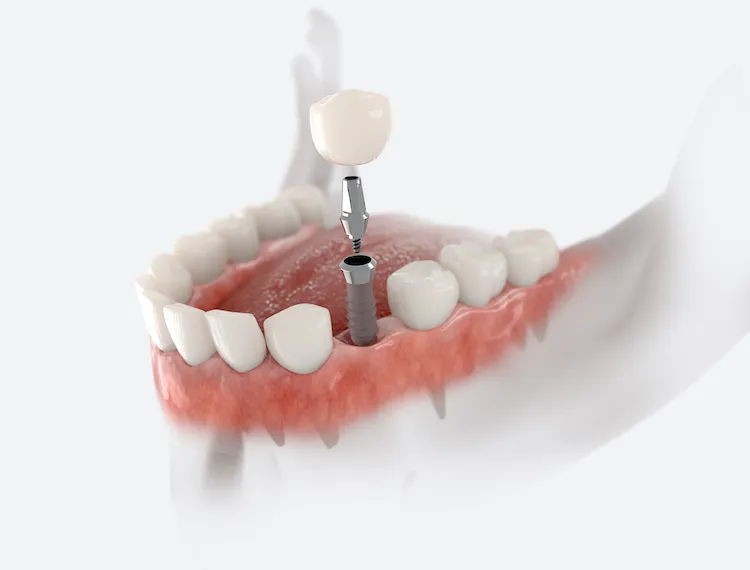
A dental implant is a tiny titanium post that serves as an artificial tooth root. We place it right into your jawbone. Over time, that post fuses with your bone through a process called osseointegration. Then we attach a crown on top that looks and feels like a real tooth.
We will make sure you are completely numb and comfortable. Many patients even choose sedation if they are nervous. Dr. Sahil Goyal and Dr. Anshu Goyal have extensive experience placing implants and will guide you through every step.
Step 1: The Planning Visit (No Surgery Yet)
Before we do anything, we need to see what is going on inside your jaw. That is where our CBCT scanner comes in. It is a special 3D X-ray that gives us a complete picture of your bone, nerves, and sinuses.
This step is crucial. It tells Dr. Sahil Goyal or Dr. Anshu Goyal exactly where to place the implant. We can avoid nerves and make sure you have enough bone to support it. If you don’t have enough bone, we will talk about a bone graft first. That is a whole other conversation, but don’t worry. It is common, and we do it all the time.
Our CBCT technology is one of the reasons patients from Howard County choose us for their implant needs. We don’t guess. We plan with precision.
During this visit, we will also:
- Review your medical history and any medications you are taking
- Discuss your treatment goals and expectations
- Explain the timeline for your specific case
- Provide a clear cost estimate so there are no surprises
- Answer all your questions about the procedure
Step 2: The Day of Implant Placement
First, we numb the area. You will feel a little pinch from the numbing shot, then nothing. If you choose sedation, you might not even remember much of this.
Next, we make a tiny incision in your gum. It sounds dramatic, but it is very small. Then we drill a precise, narrow hole into your jawbone where the implant will go. You won’t even feel it. We use special guides from the CBCT scan to make sure everything is exactly where it should be.
Then we place the titanium post into that hole. We screw on a small cap called a healing abutment. Then we stitch the gum closed around it. The whole thing usually takes about an hour for one implant. That is it.
Dr. Shalini Sethi, our board-certified periodontist, is involved in the implant placement process. She has advanced training in surgical implant placement and works closely with our restorative dentists to ensure the implant is positioned perfectly for the final crown.
For multiple implants or more complex cases, the procedure may take longer. But the experience remains the same: comfortable, precise, and carefully planned.
Step 3: The Healing Phase (The Boring Part)
Now comes the waiting. Your jawbone needs time to grow around the implant and lock it in place. This process is called osseointegration. It takes about three to six months.
During this time, you can eat normally. Just avoid super crunchy or sticky foods directly on that spot. We will give you specific instructions.
What to expect during healing:
- Mild soreness for a few days (over-the-counter pain relievers usually help)
- Some swelling or bruising (ice packs can help)
- A soft food diet for the first few days
- Follow-up appointments to check your progress
Most patients tell us the healing phase is easier than they expected. In most cases, you can go back to work and your normal routine the next day.
Step 4: Placing Your New Tooth
Once you are healed, you will come back for one short visit. We remove the healing cap and take a quick impression of your mouth. We send that to a lab that makes your custom crown.
About two weeks later, you return. We unscrew the temporary cap and screw your permanent crown into place. We check your bite and make sure you are happy with how it looks. Then we send you on your way.
That is it. You now have a tooth that looks real, feels real, and will not come out when you bite into an apple.
Same-Day Crowns for Implants
In some cases, we can use our technology to fabricate your permanent same-day crown right in our office. This eliminates the need for a temporary crown and a second appointment. Not every patient qualifies for this option, but when they do, it is a game-changer.
What About Bone Grafts?
Some patients don’t have enough bone to support an implant. This can happen if you have been missing a tooth for a long time or if you have gum disease. In these cases, we may recommend a bone graft.
A bone graft involves adding bone material to your jaw to create a stronger foundation. The graft material encourages your own bone to grow and fill in the area. This adds a few months to the overall timeline, but it is a common and predictable procedure.
We perform bone grafts right here in our Columbia office. You don’t need to see a specialist elsewhere. Everything happens under one roof with our coordinated team.
Does It Hurt?
You shouldn’t feel pain during the procedure. After the numbing wears off, you will have some soreness. It feels like after a hard workout or bumping your shin. Most patients say it is less painful than a tooth extraction. Over-the-counter pain relievers usually do the trick for a day or two.
Here is what patients typically experience:
- Day 1-2: Mild discomfort, some swelling, soft foods
- Day 3-7: Soreness fades, can eat more normally
- Week 2: Most patients feel completely normal
Our team will provide you with detailed aftercare instructions and check in with you after your procedure to ensure you are healing well.
Ready to Stop Hiding Your Smile?
If you have been living with a missing tooth, you don’t have to anymore. We have helped countless patients from Ellicott City, Clarksville, and right here in Columbia get their smiles back.
Call our new patient line at 410-670-8211 to schedule a consultation. You can also request an appointment online anytime.
We will take a look, answer your questions, and help you figure out if implants are right for you. No pressure, no judgment, just honest help.